Nobody gets in the building until he tells you how he is.
This is the first thing a player sees. Not a menu. Four taps, once a day, and there is no skip button on it.
- Heart Check. Green, yellow, or red.
- Sleep. Great through Terrible.
- Soreness. 0 to 5.
- Anything banged up? Yes opens a required box.
Adoption is not a hope here. It is a door.
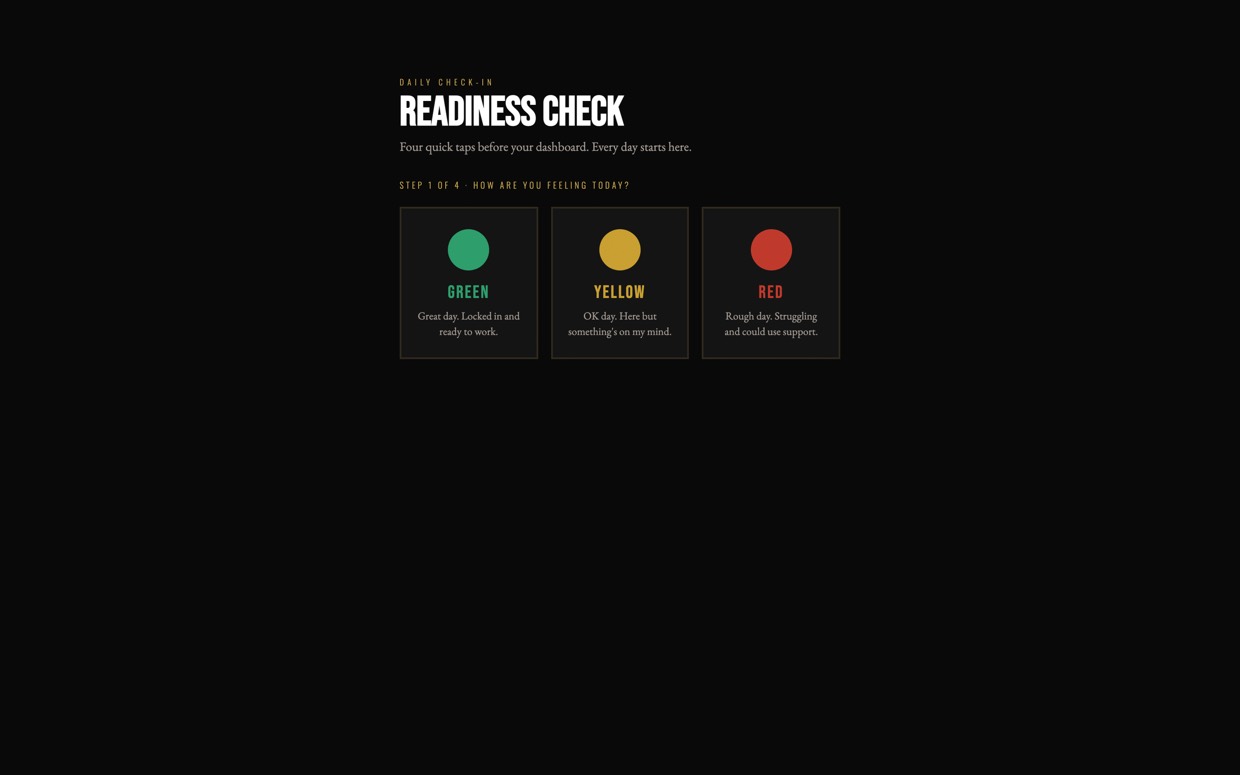
What to look at. Step 1 of 4. The dashboard does not exist for this athlete until he answers. This is the honest answer to “how do you get high schoolers to log in.”
By the time you walk in, the board is already built.
Not a report you run. The first screen after you log in, ranked by who needs you most.
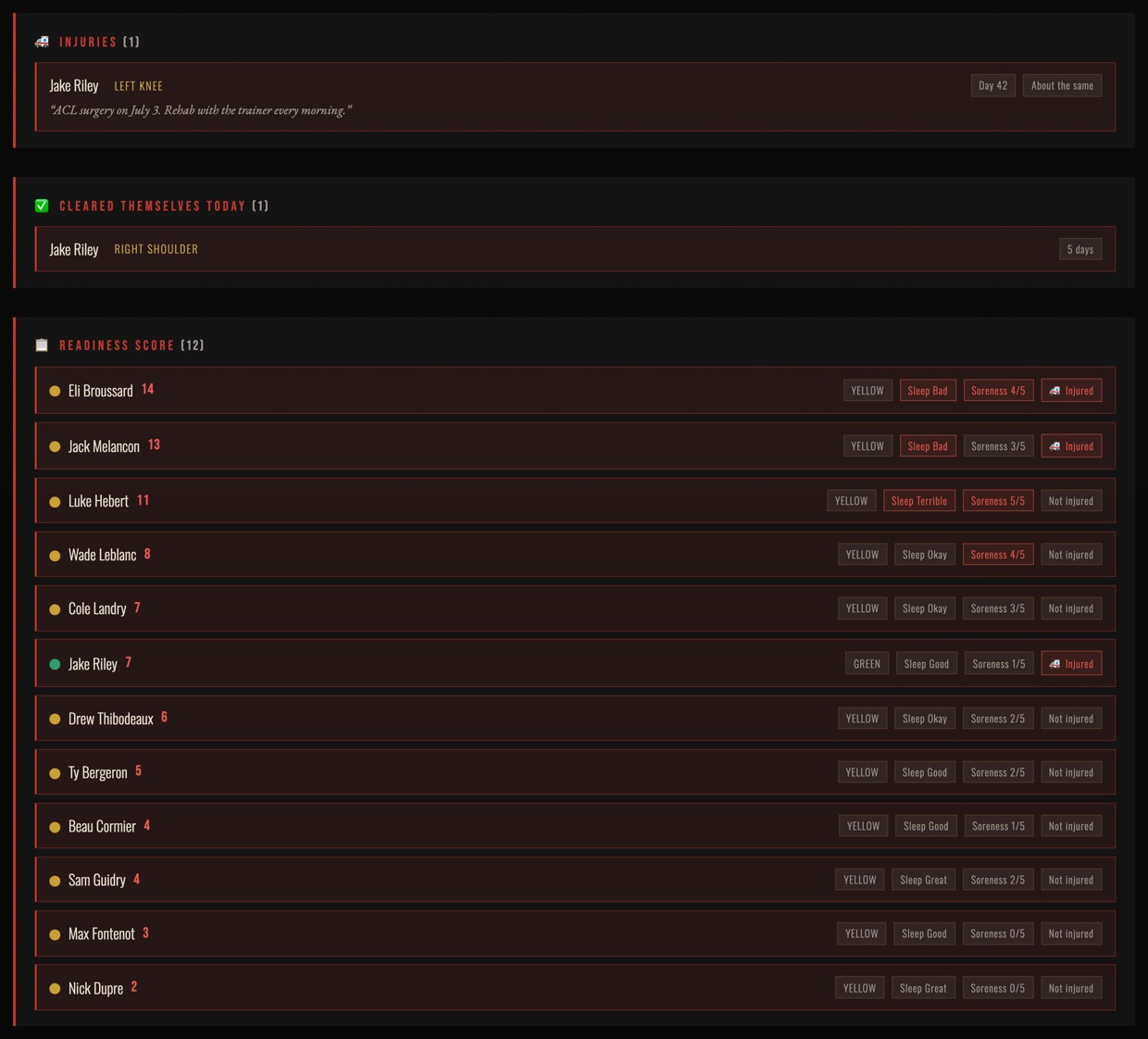
What to look at. The Injury Board answers three questions in the order a coach asks them. New today is who got hurt, or reported something again, since yesterday. Cleared themselves surfaces a self-clear as an event rather than as silence. Still carrying is the whole open list. None of the three is ranked, so a hurt kid can never be buried under a sore one. Readiness Score then ranks everyone worst first, and anyone with a clean check-in does not appear at all.
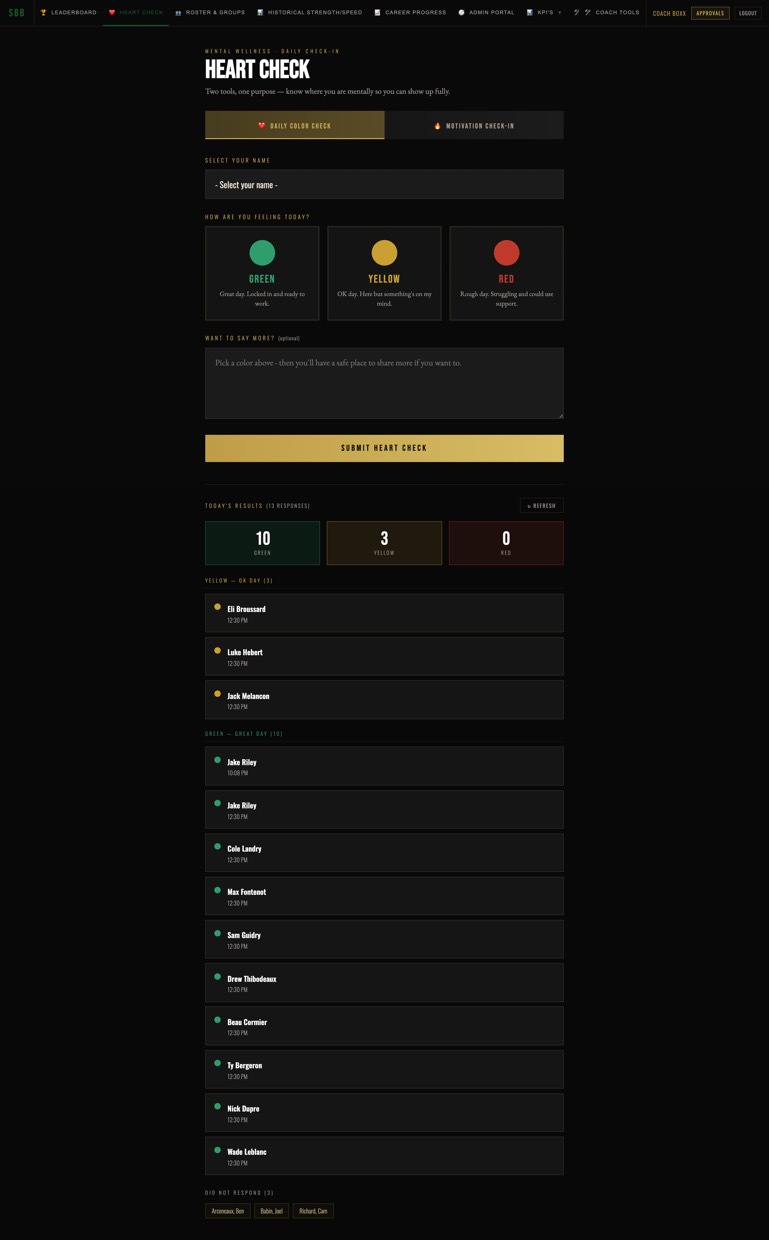
What to look at. Every check, every day, with the note the athlete wrote, kept as history rather than as today’s number.
An injury is a record, not a paragraph he retypes for six weeks.
A kid six weeks out from surgery should not describe the same knee forty-two mornings in a row. So he does not. On day one he tells you. Every morning after, the app asks how it is: same, better, worse, or not bothering me anymore.
- The athlete closes his own injury. No coach approval on every tweaked ankle, or the coach becomes the bottleneck.
- Closing never deletes. A same-body-part report soon after reattaches to the original, so the whole arc stays in one place.
- It shows whether or not he checked in today. A kid out with surgery who skips a morning does not vanish off the board.
The gap between who he thinks he is and who his team sees.
Every player rates himself. Every teammate rates him too. The distance between those two numbers is the most useful thing on the screen, and no other platform in this market goes looking for it.
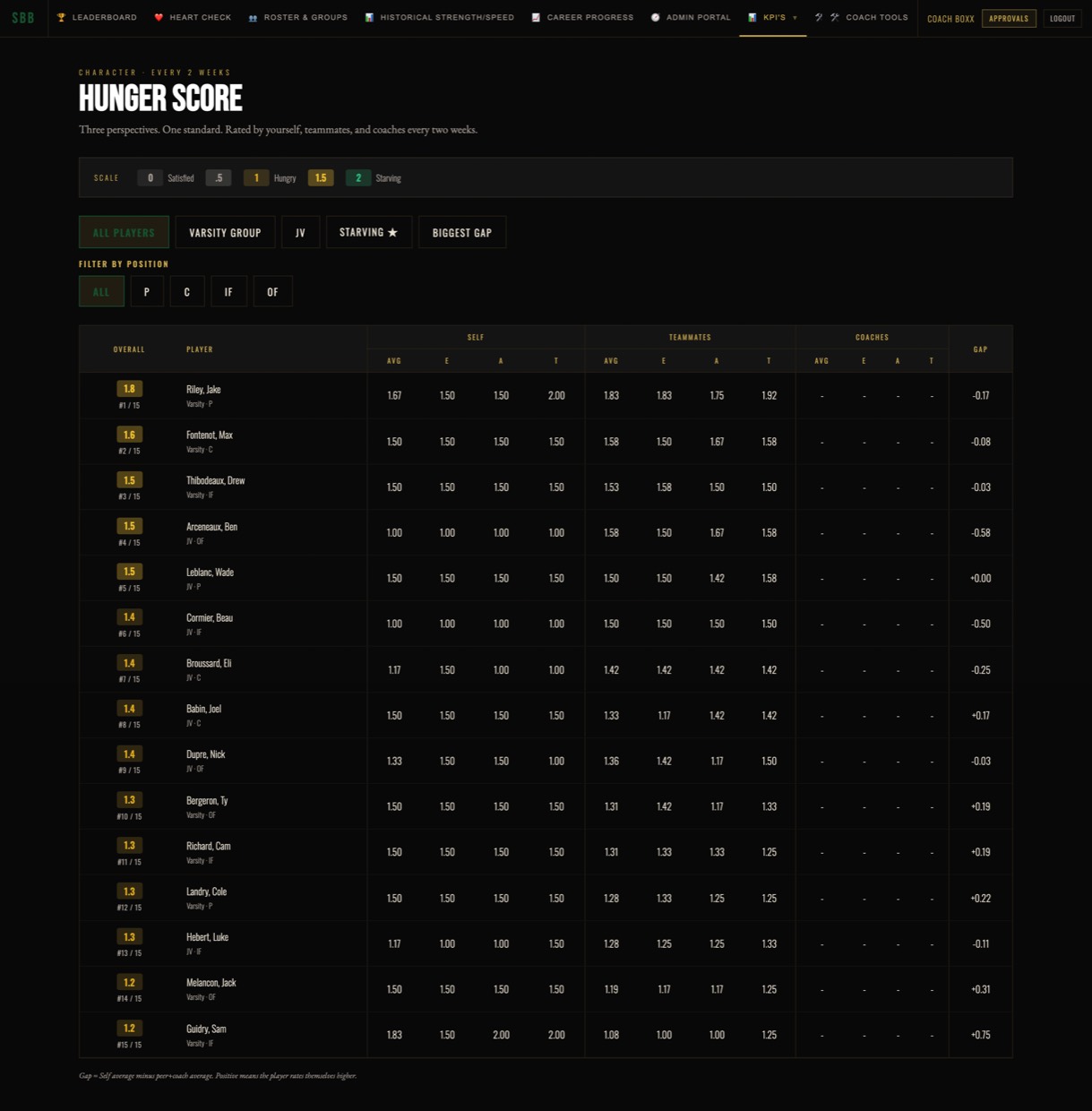
What to look at. The last column. Sam Guidry rates himself1.83 while the room says 1.08, a gap of +0.75: that kid needs the truth. Ben Arceneaux rates himself 1.00 and the room says1.58, a gap of -0.58: that kid needs to hear today that his teammates believe in him more than he does. There is a whole filter for it, and both athletes are invisible until somebody measures it.
Your words. Counted every day.
In front of the kid who agreed to them.
You name the standards in your own language, off the full library of things the platform measures. Here is how one live program’s board actually reads.
Central High School football, live on mhpdevelopment.com, August 2026. Bone is what has been reached. Red is what is still on the table.
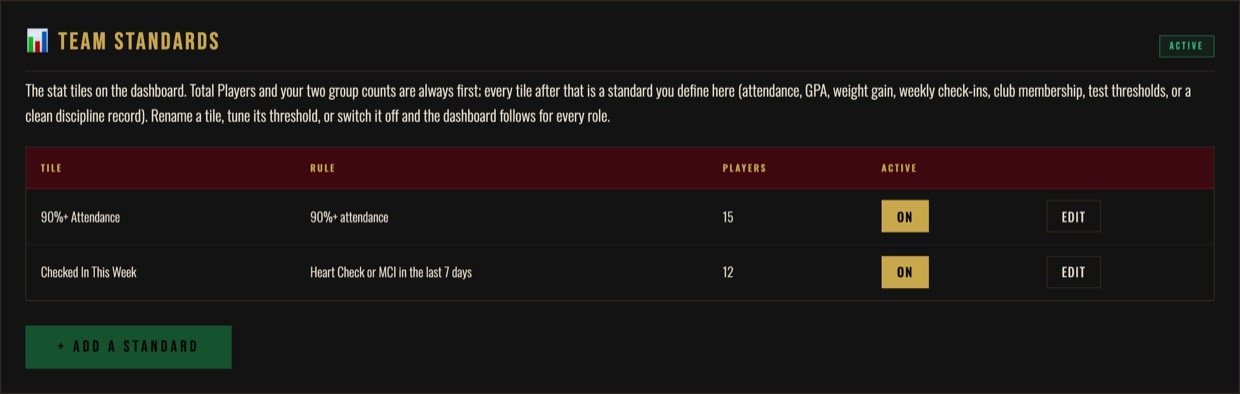
Every program in America says it values effort, discipline, and accountability. This is what it looks like when you have to put a number beside it.
Built for a man standing in a weight room with a phone.
Every entry grid works the same way: type, press Enter, and the next athlete scrolls into place under your thumb.
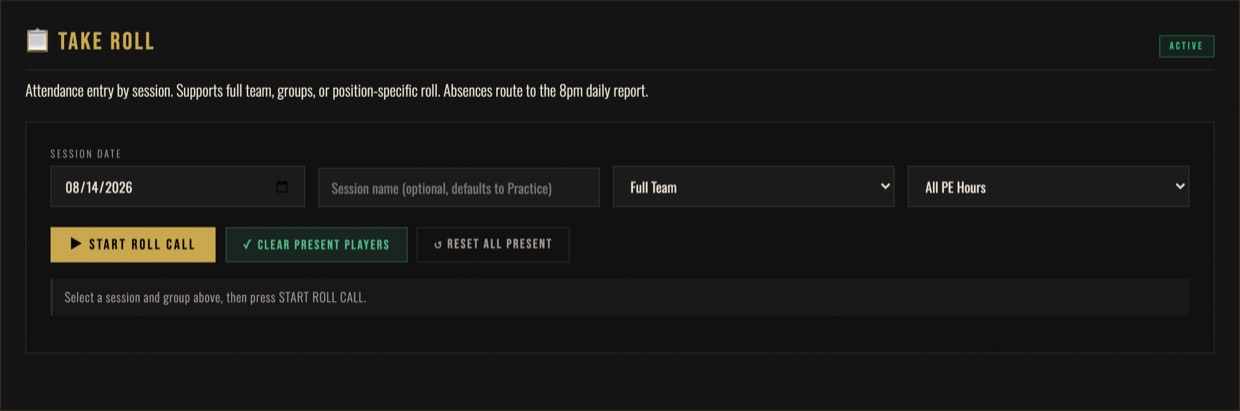
Roll Call. Full team or one group, with its own session date so a roll taken on paper at 6am can be entered honestly the next morning.
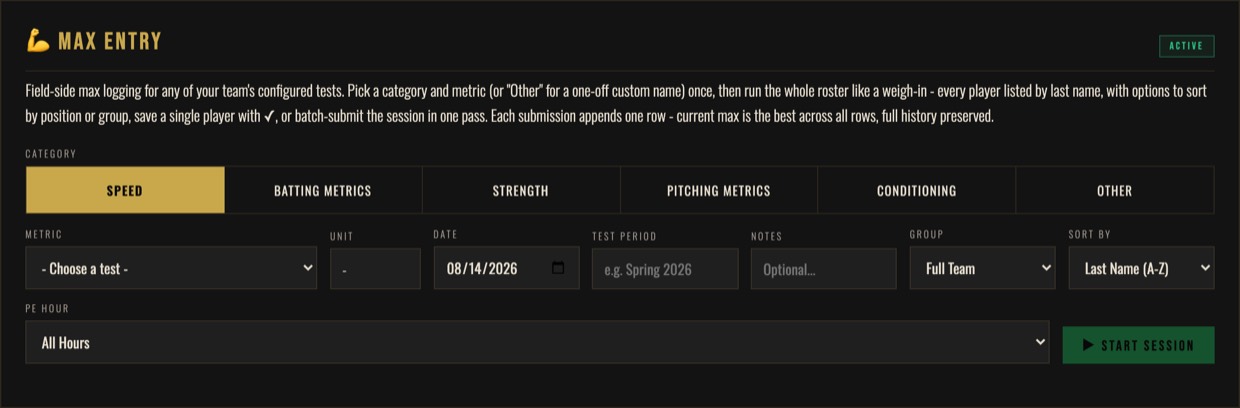
Max Entry. Pick a category, start a session, and run the roster. Every row reports back saved, already logged, or exactly what was wrong.
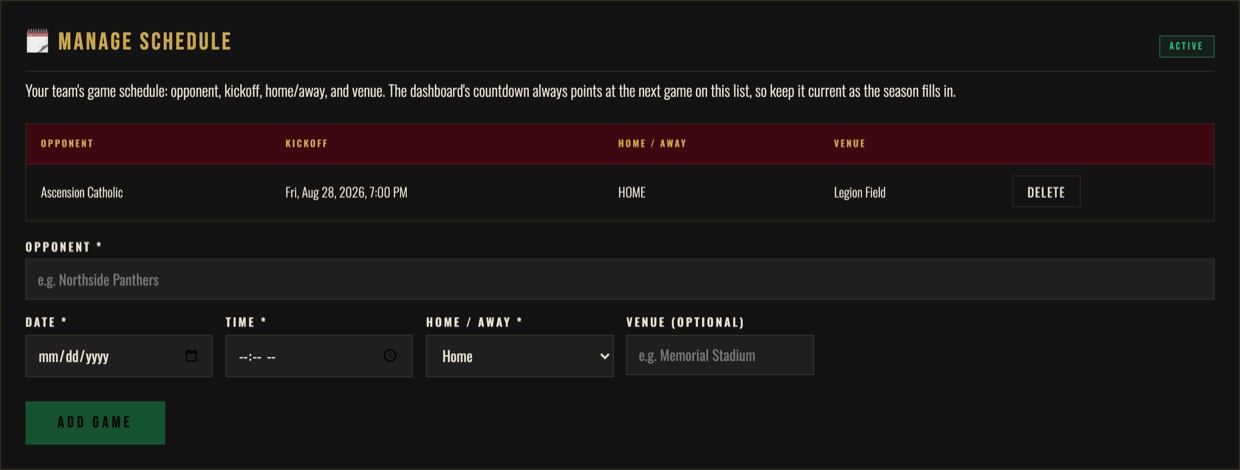
Schedule. Games in, countdown live on every dashboard in the program.
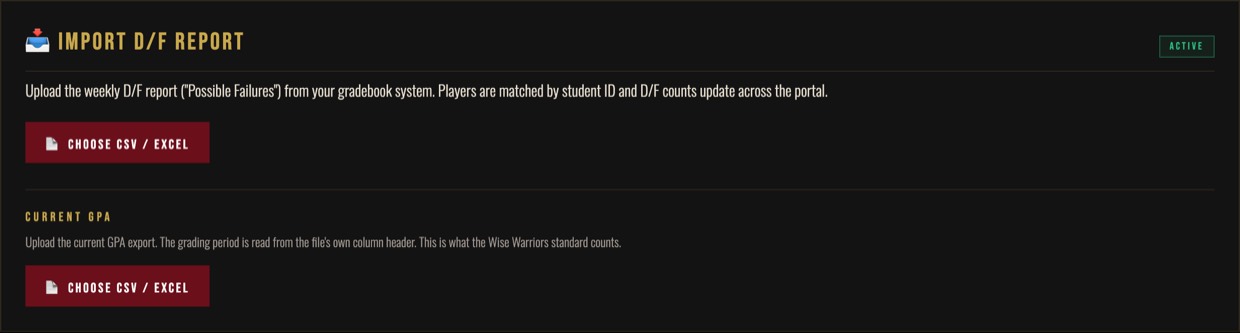
School imports. The district’s own weekly exports, dropped in as they come.
Any sport.
Your tests. Your words.
Nothing here is hardcoded to football. Categories are free text you name, with subcategories underneath, and every screen builds itself from what you configured.
The screens on this page are a baseball program. It runs Batting Metrics and Pitching Metrics with Velocity and Spin Rate underneath. A football staff keeps Strength and Speed. A track staff runs its own. Nobody touches code.
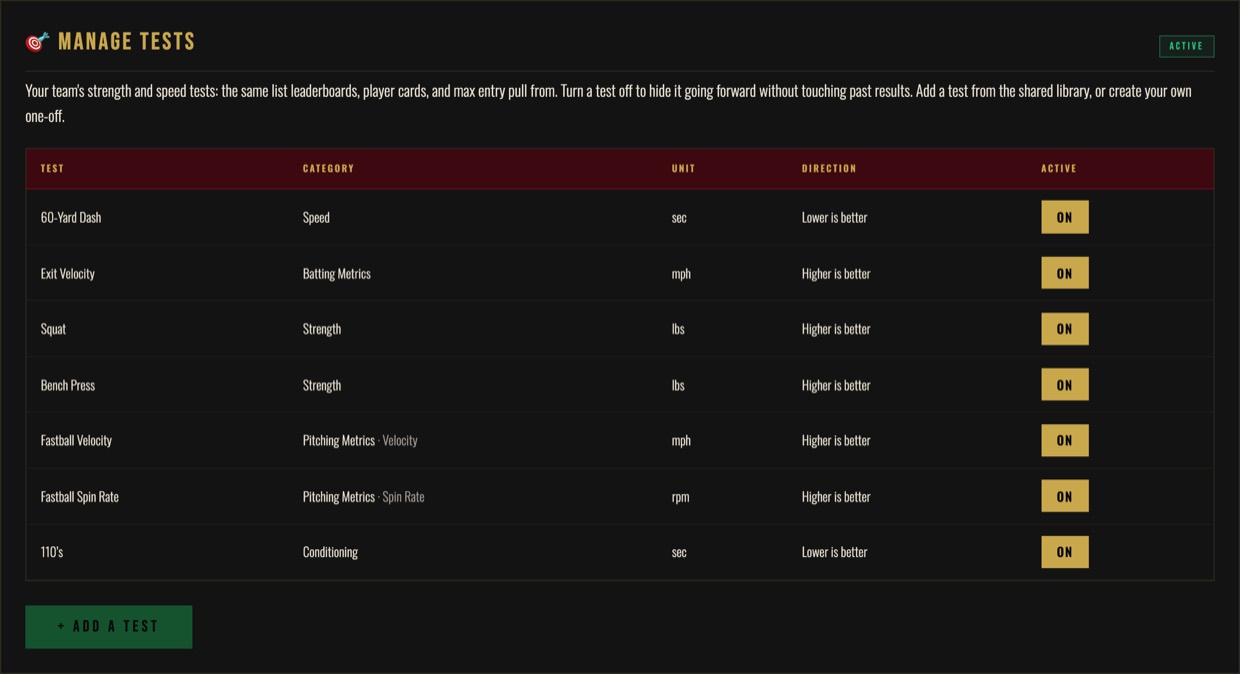
What to look at. Pitching Metrics with a Spin Rate subcategory, sitting beside Strength and Conditioning, all named by the coach.
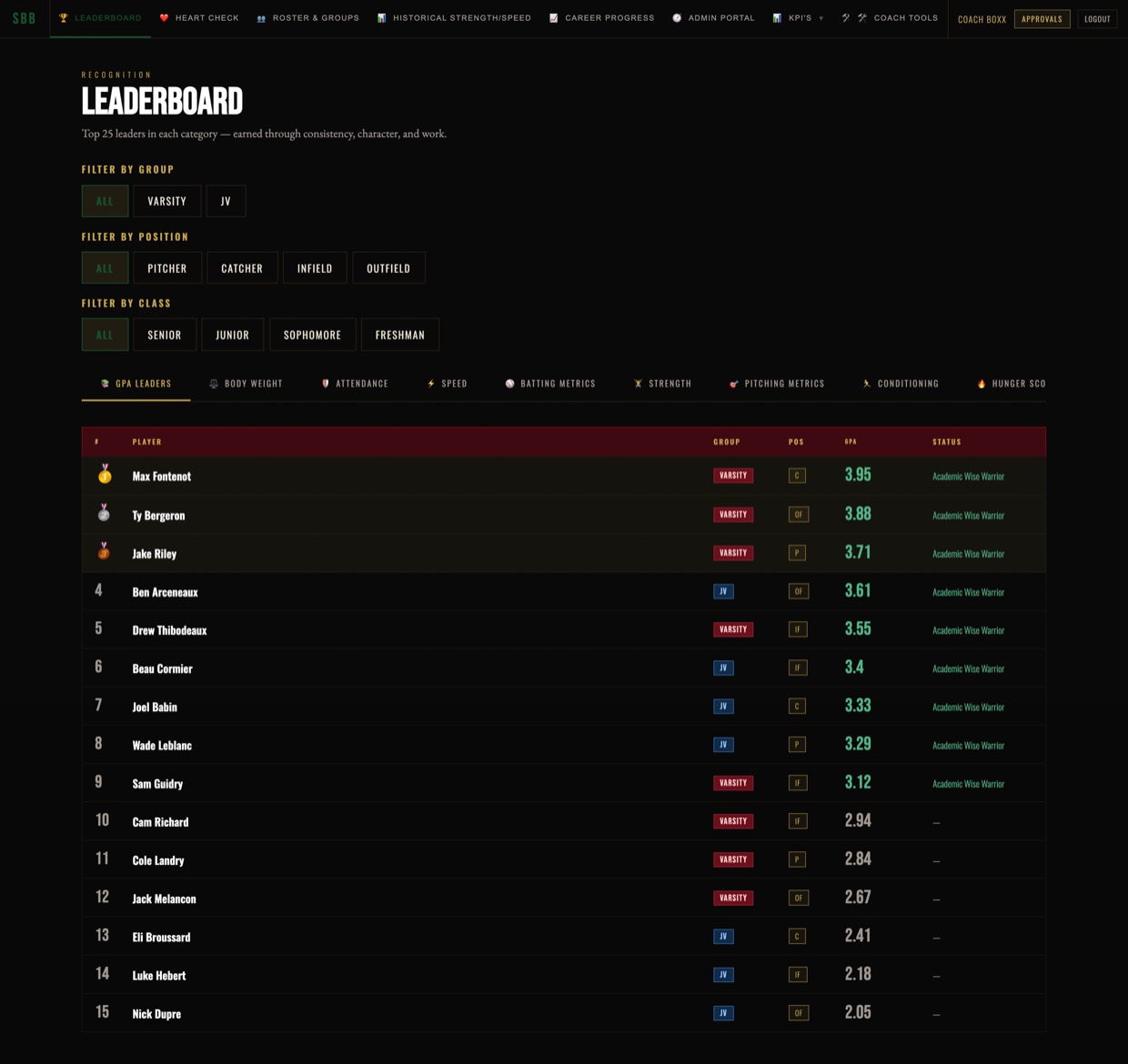
And it follows through. The leaderboard grows one tab per category you created, filtered by class, position, or group.
A record instead of a memory.
The school already produces the files. The failure list, the GPA report, the referral log. MHP takes those exports as they are.
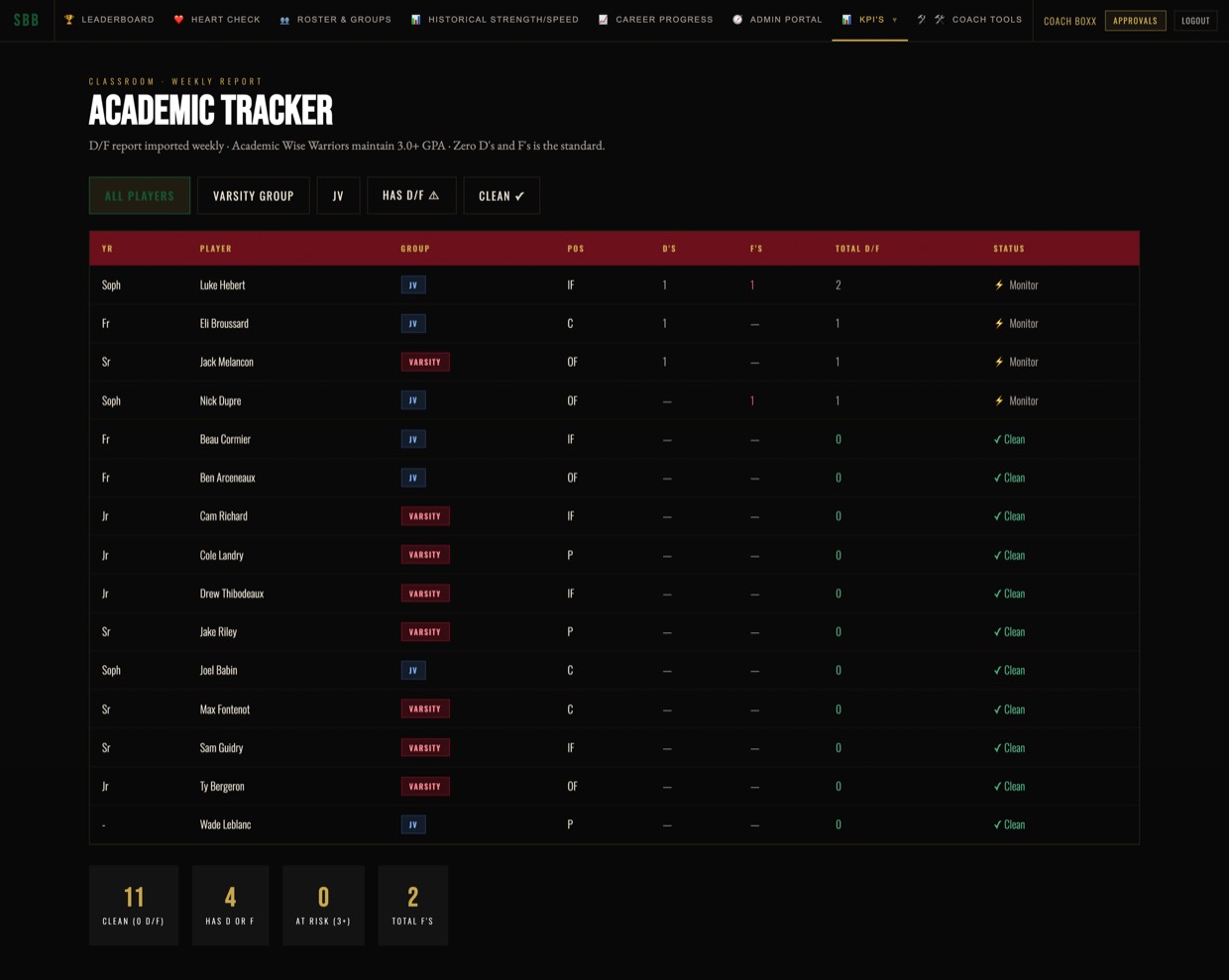
The course, not a count. Not “one F”. The course, the percentage, and which teacher to go talk to.
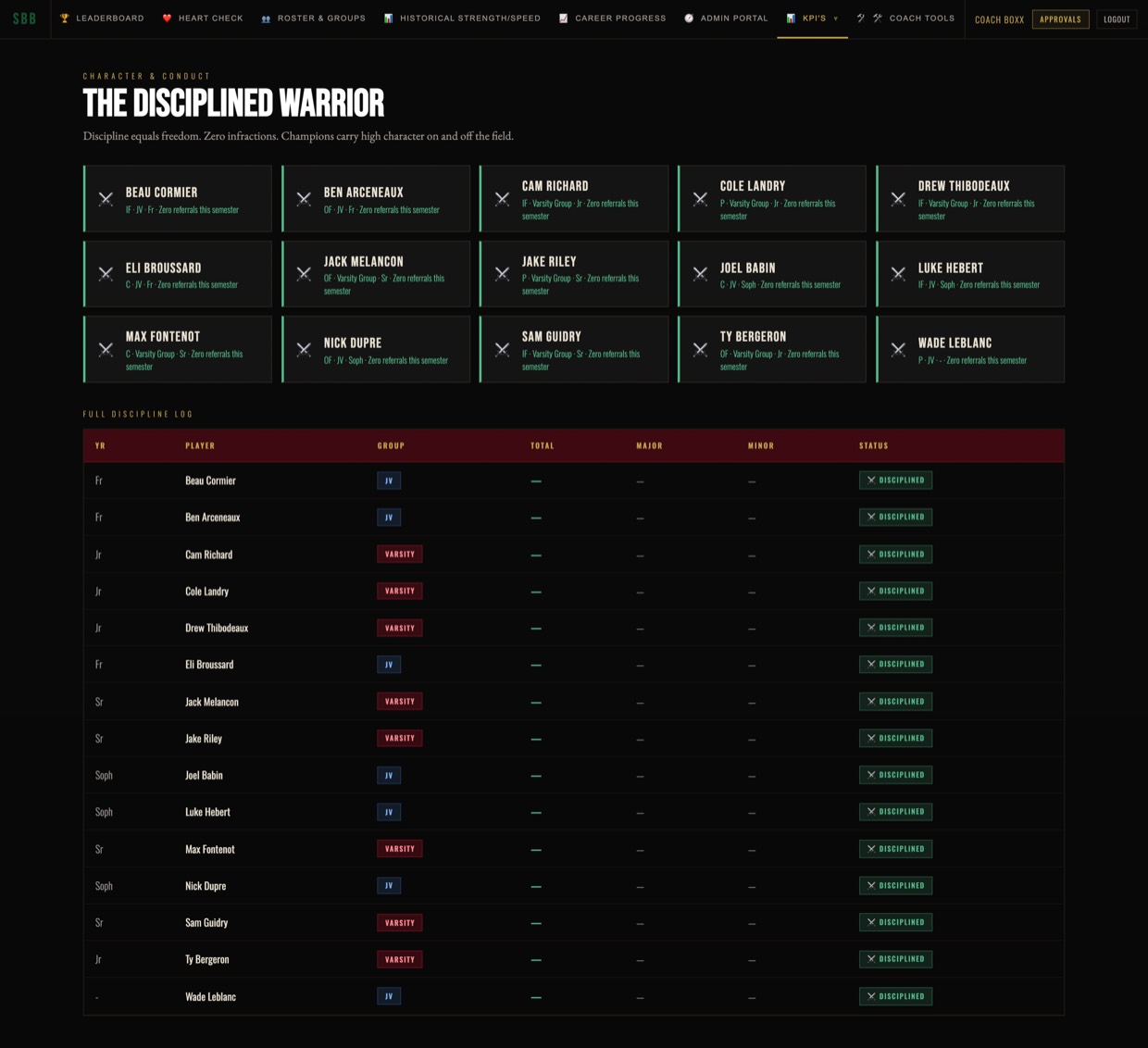
Referrals that do not duplicate. Imports key on the referral number, so running Monday’s file twice writes nothing new.
An empty table used to render as a perfect score. That is exactly the difference between a report and a record.
He logs into a different product than you do.
Same data, different job. His job is to see himself clearly and to know exactly what is left.
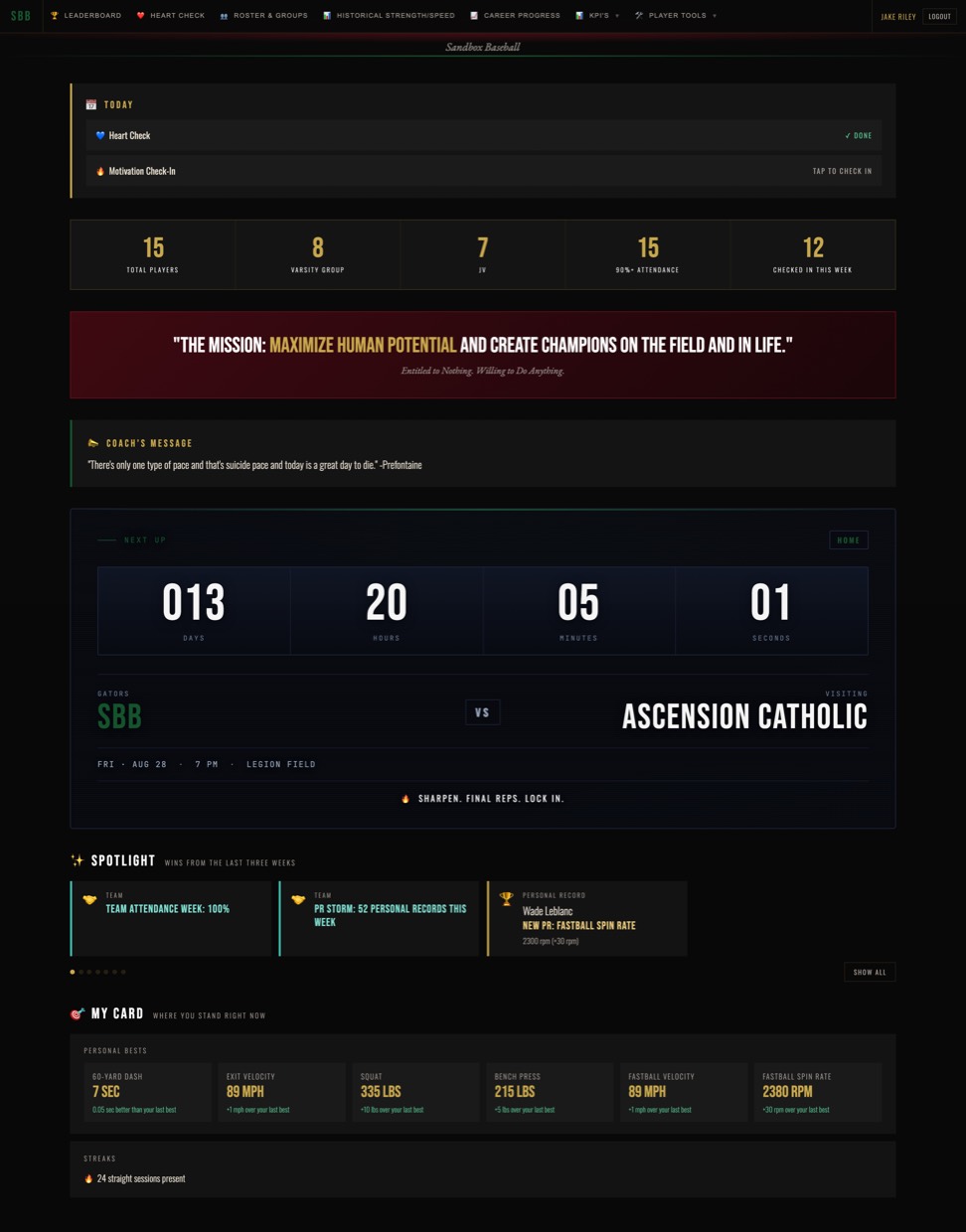
What to look at. Today is a task list and is never dressed up as an achievement. Spotlight rotates real wins from real teammates, with a monitor watching the spread so the same four names cannot take every card. My Card shows his personal bests with the change since last time, his streaks, and the exact distance to the next milestone. Not “you are doing great.” Fifteen pounds from the club.
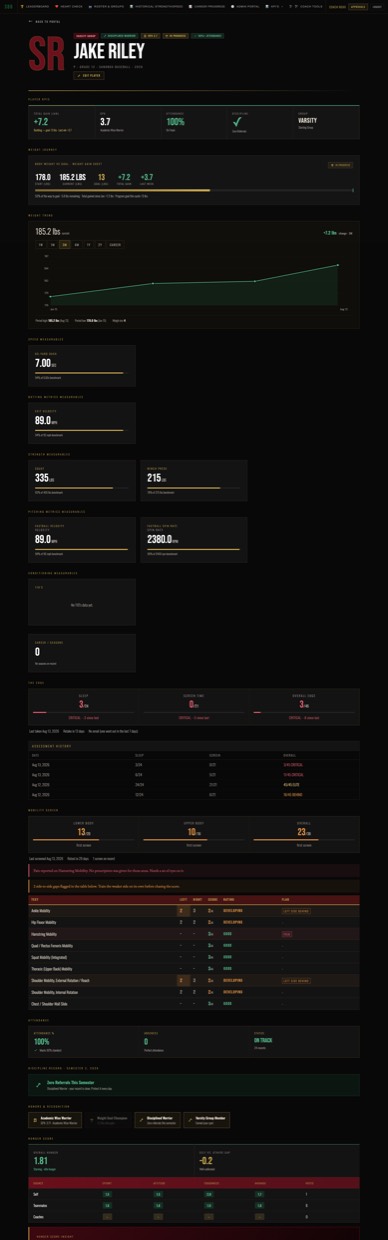
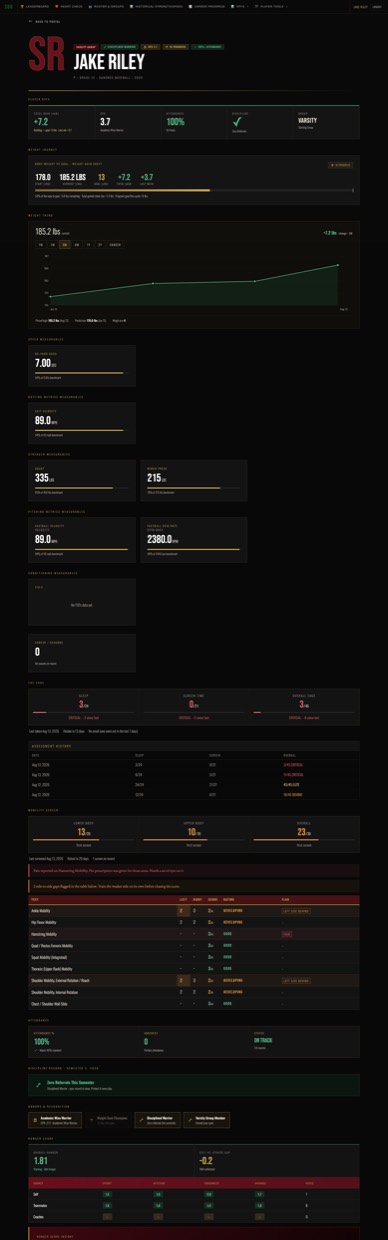
What to look at. The deepest page in the product. Everything on file about one human being, in one place.
One page, one kid, everything.
- Measurables and personal bests with the change since last time, per category you configured.
- Attendance, discipline and academics sitting beside the numbers, not in another system.
- His fuel standard, computed from his real height and his most recent weigh-in.
- His mobility screen and his Edge score, with the delta against his last one.
- His household and his contacts, gated so no teammate can ever open them.
Tools that belong to him.
Four things a kid can run on himself, which is where ownership actually starts.
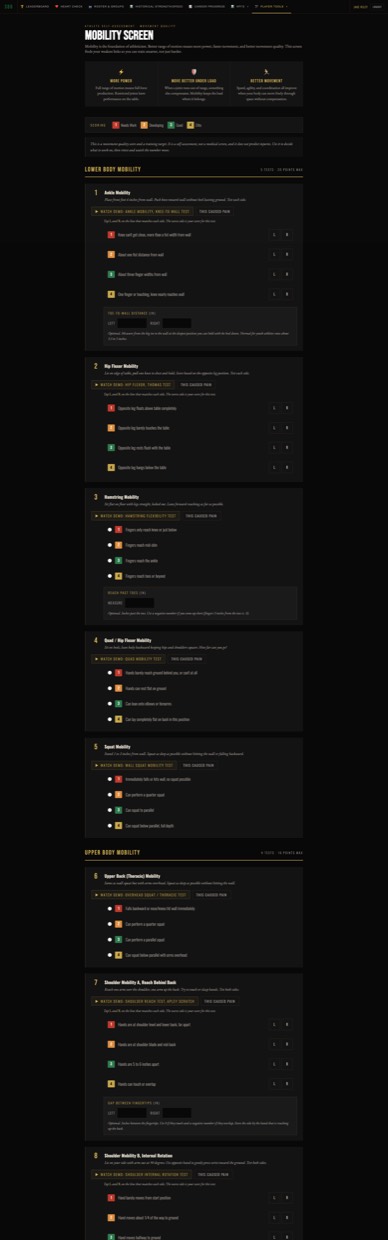
Mobility Screen. Nine tests, scored Lower, Upper and Overall out of 36, with a written prescription for every test at every score. It flags pain instead of prescribing into it, captures left and right where a side gap matters, and counts down to the retest.
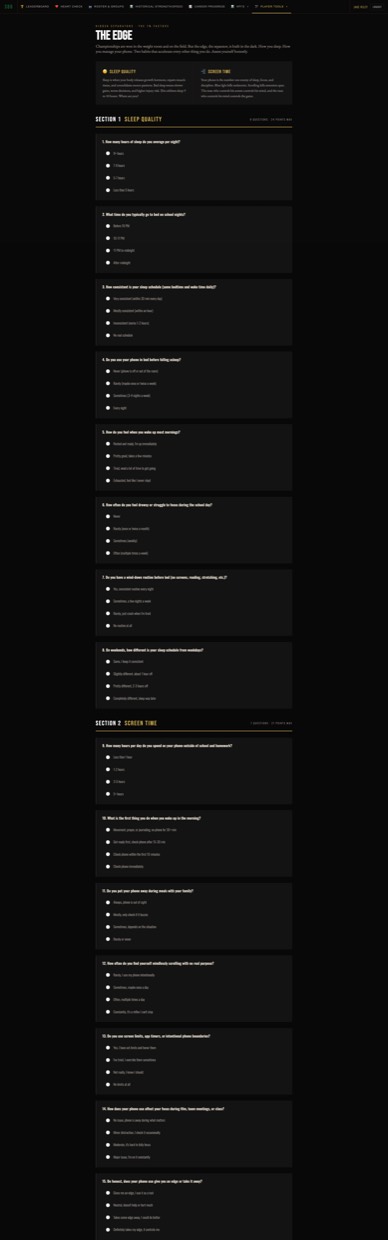
The Edge. Fifteen questions across sleep quality and screen time, five grades from Elite to Critical, and his two lowest answers named as the starting point.
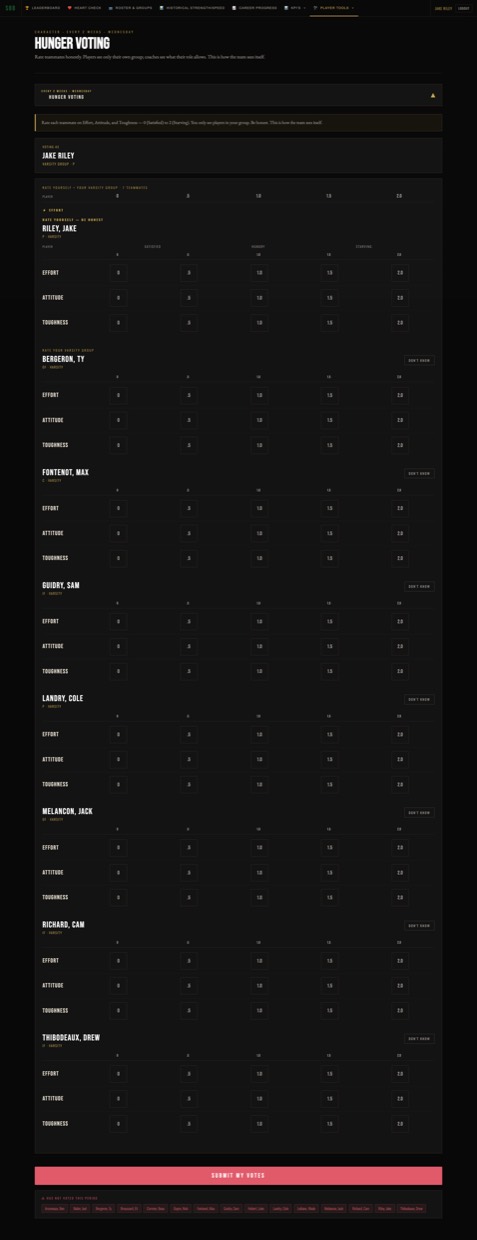
Hunger voting. He rates himself and he rates his teammates. This is the input side of the gap on slide 08.
My Profile. His own words about his own home: who he lives with, how a normal week works, who he has lost, and what should never be brought up in front of the team. A coach reads it. No coach can write it.
Every kid’s calorie target, from his real numbers.
Computed from his height and his most recent weigh-in using the formula validated for 10 to 18 year olds, not the adult one that most calculators use. Gain, maintain, or lose is the coach’s call, not the kid’s.
The whole roster sits in three columns. Tap a name to move him. No dragging, because coaches do this from a phone.
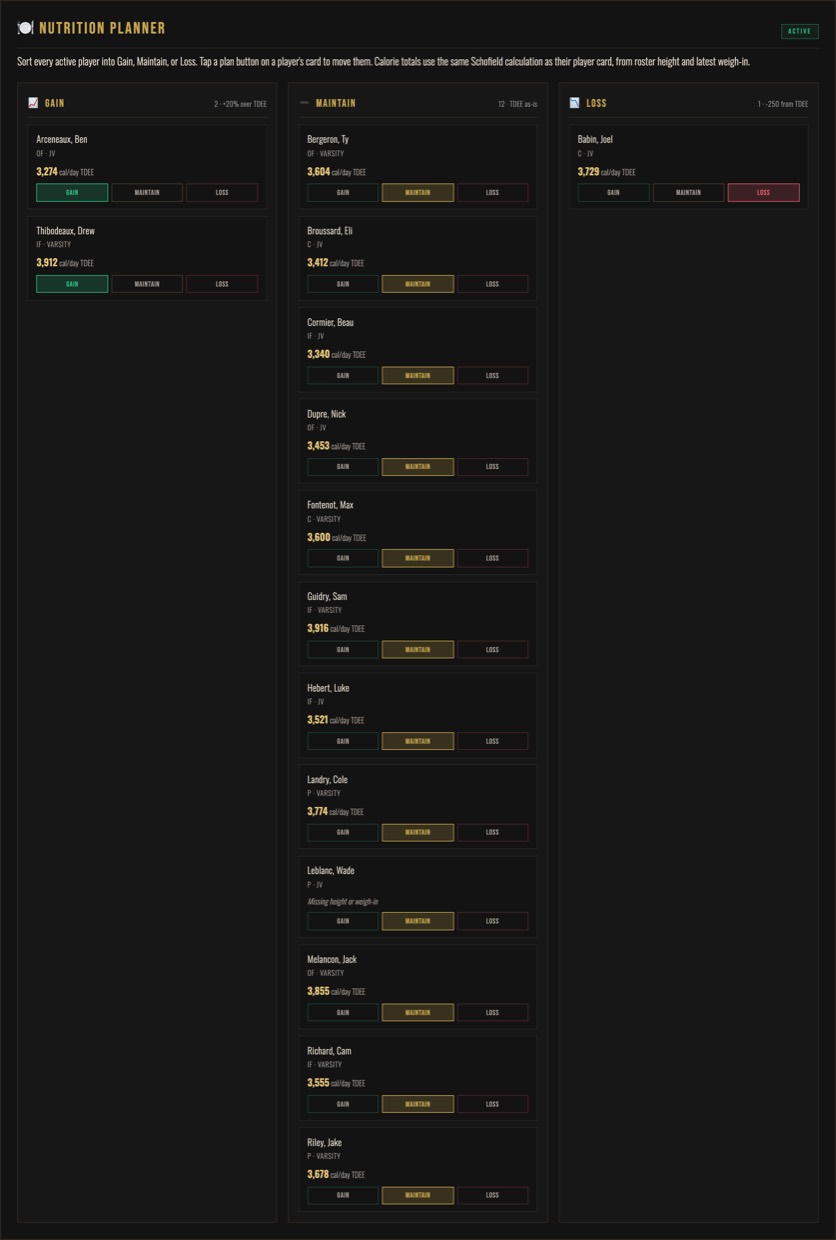
What to look at. Gain, Maintain and Loss, with each athlete’s target under his name, and an honest “missing height or weigh-in” where the data is not there yet.
For whoever signs the check.
A head coach is the one who wants this. The money usually comes through somebody else, and that person does not buy inspiration. So here it is without any.
- Every injury flag has a date and a name, written by the athlete, before practice.
- Every red mental health check is on record with who was notified and whether it arrived.
- Discipline lives in a table, not a memory, with the district’s referral number attached.
- Academic marks by course, percentage and teacher, from the school’s own export.
- Every program’s data is isolated at the database, not just in the app.
- Household information is the athlete’s to write, and no teammate can open it.
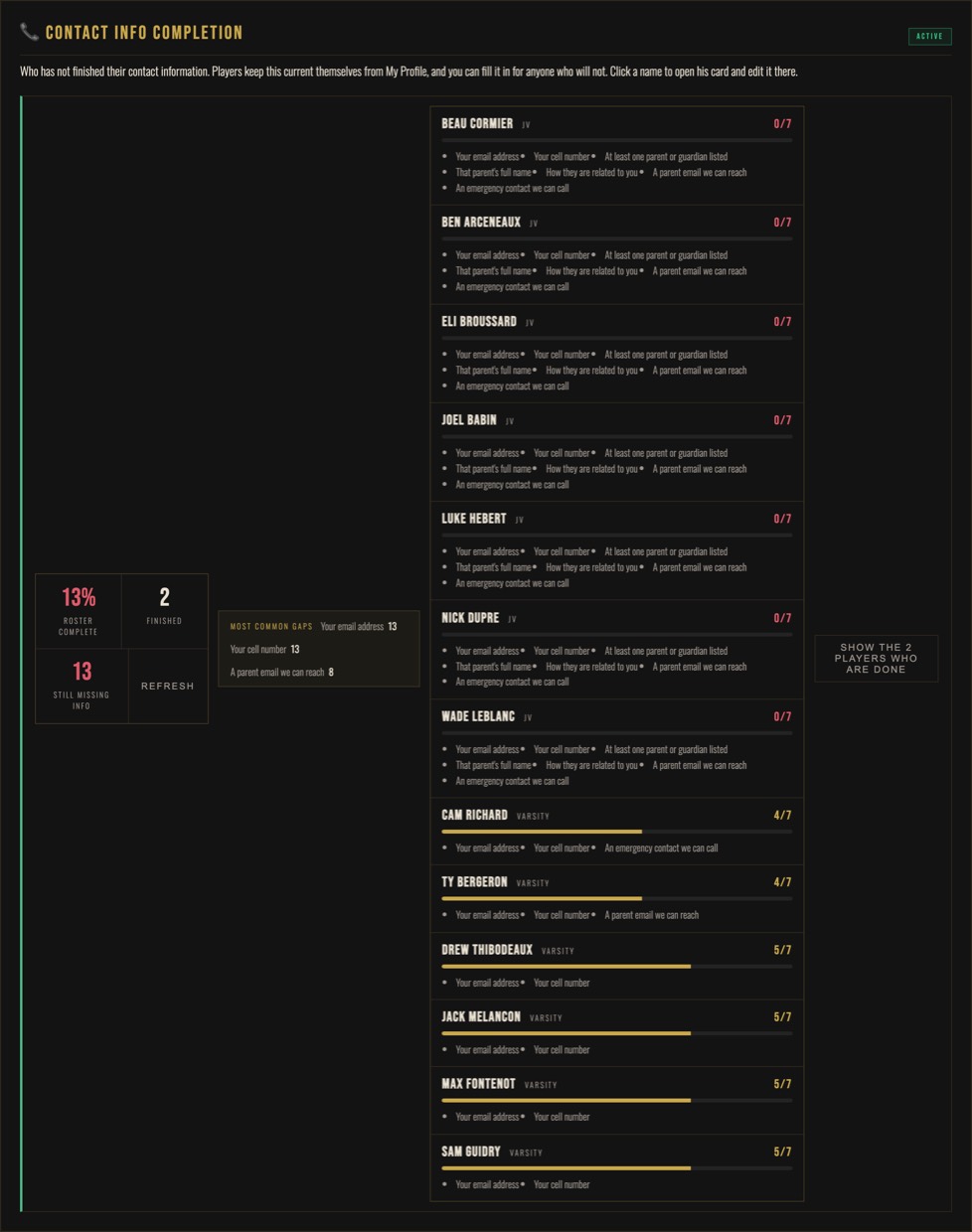
What to look at. Who has not finished, worst first, with each athlete’s exact gaps. Compliance you can actually chase.
When something goes wrong, the question is always what did you know and when. This answers it.
Your program’s name on it. Not ours.
Your colours, your team name, your position groups, your tests, your standards, and email that comes from your address. A coach can be running in about thirty minutes on a call.
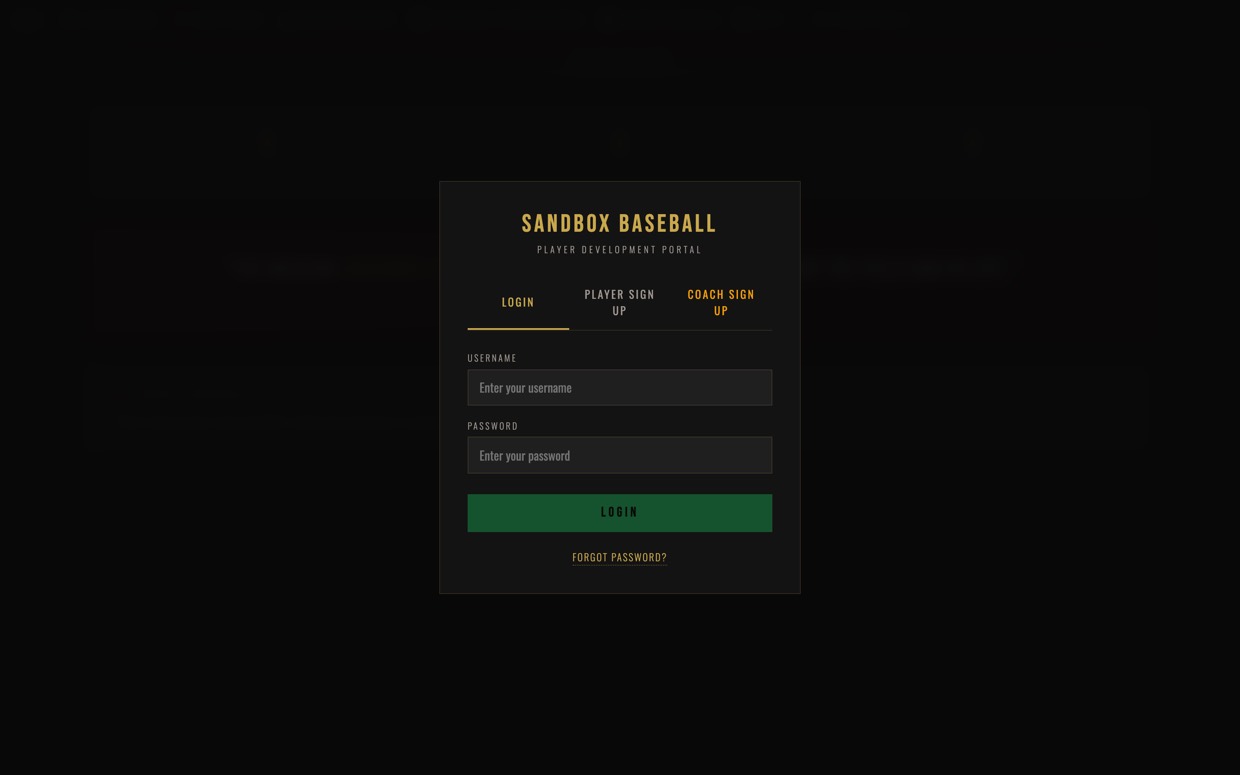
Your front door. One stable link to bookmark. Your branding, not ours.
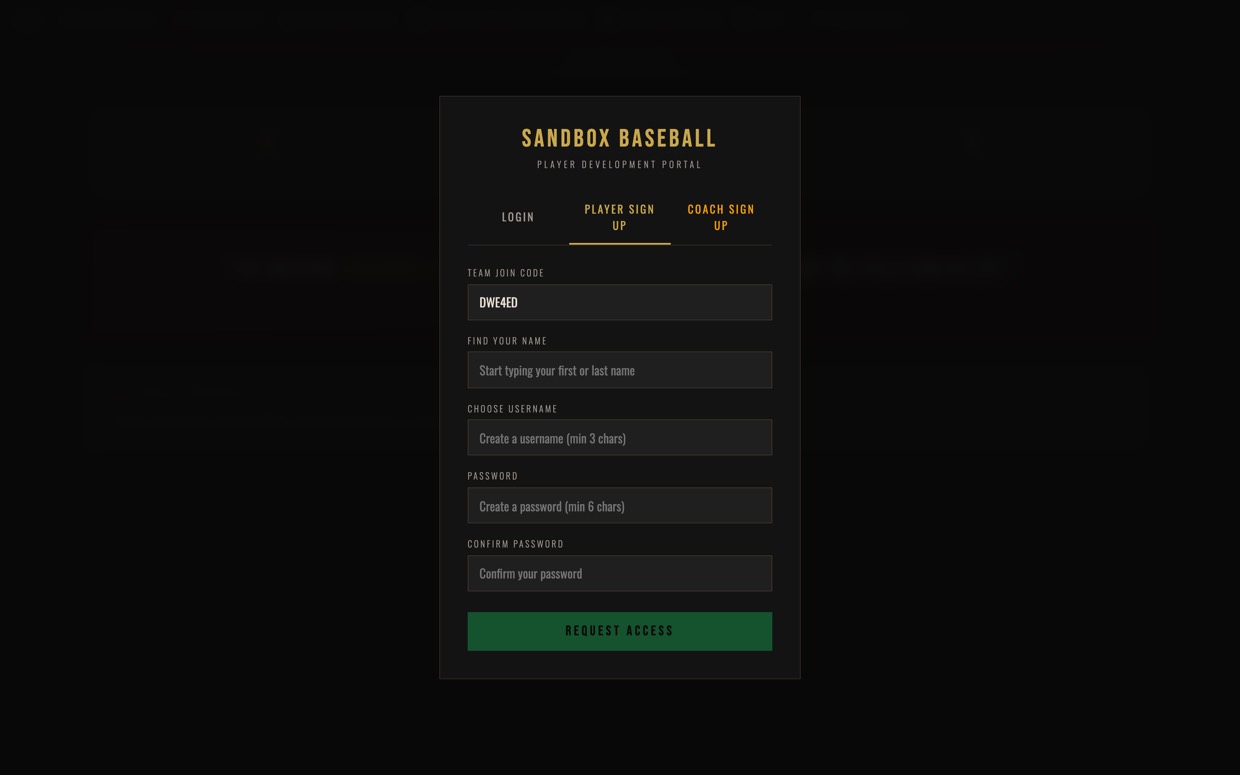
How a kid signs up. He types his name, picks himself off the roster, confirms with his graduation year, and you approve him. No student ID to mistype, no email address, no printed slips, and no signup window: rosters change all year, so it stays open all year.